DE
DE  EN
EN  ES
ES The Canary Islands are best known for their dreamy beaches, year-round mild climate, and spectacular landscapes. But beyond sunbathing and beach holidays, the Canaries hide numerous quirky, exciting, and surprising peculiarities that even many regular visitors don’t know about.
Whether it’s a beach that looks like it’s covered in popcorn, a restaurant in the middle of an active volcano, an abandoned leper colony, or even a drink that is harvested from clouds – the Canary Islands are full of curious places and extraordinary stories.
Anyone planning their next Canary Islands holiday and craving unusual experiences should definitely keep reading. We show you seven strange facts about the Canary Islands that are guaranteed to amaze and make your stay even more unforgettable.
1. El Diablo – The restaurant that cooks on a Volcano
On Lanzarote, you won’t just find spectacular volcanic landscapes – but also a restaurant that literally cooks with the power of the Earth. In Timanfaya National Park lies the famous El Diablo Restaurant, where the heat of a volcano becomes the stove – an experience you can only find in the Canary Islands.
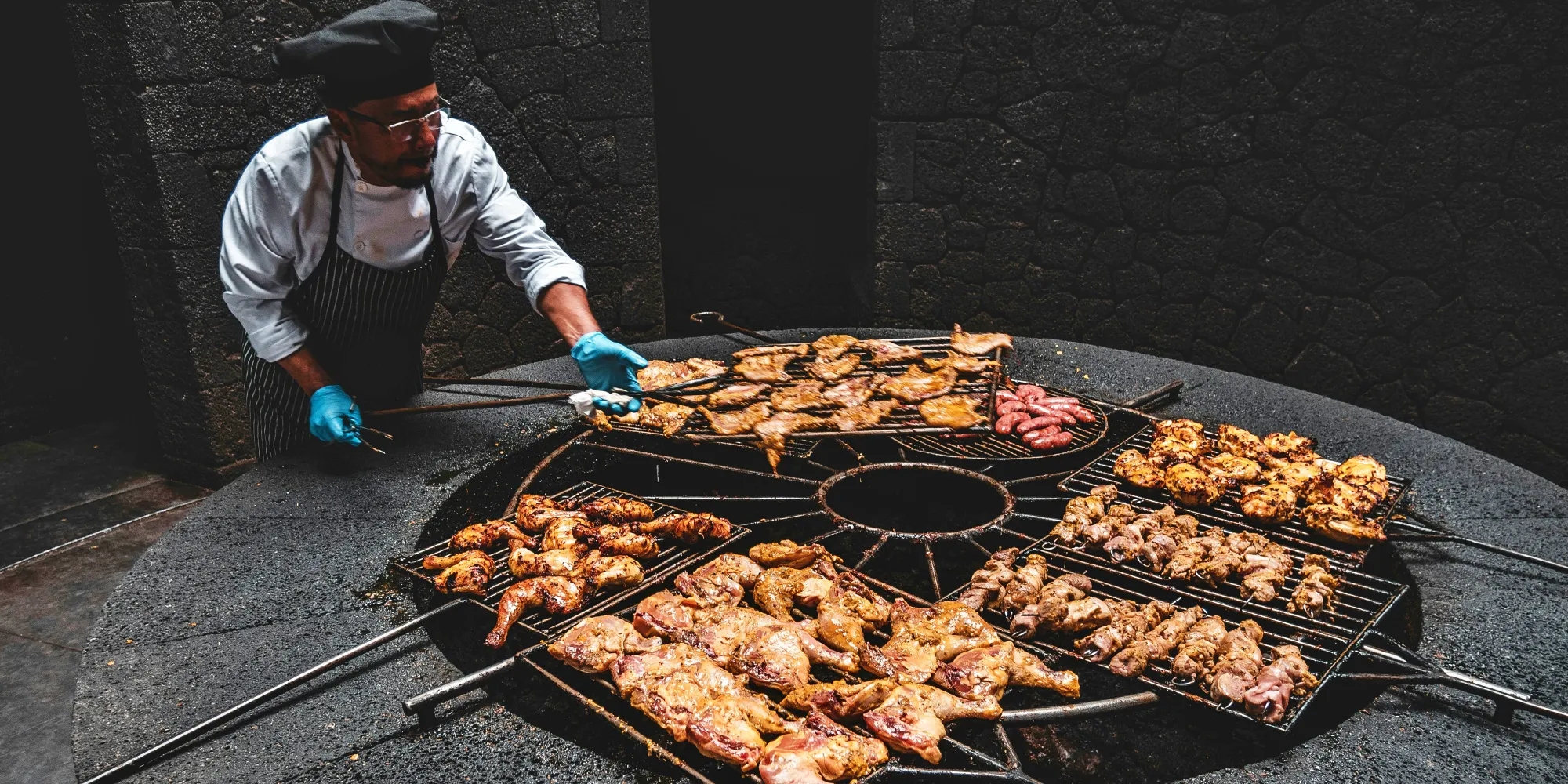
The culinary concept is as curious as it is ingenious: a huge grill is placed over a volcanic opening through which geothermal heat rises from deep underground. Meat, fish, and vegetables are grilled on this surface – without gas, electricity, or fire, using only the natural heat from below.
Temperatures beneath the surface can reach several hundred degrees, and even at a depth of 15 meters they can exceed 600°C – enough energy to prepare an entire menu. The restaurant was designed in the 1970s by the Canarian artist César Manrique and spectacularly combines architecture, nature, and gastronomy. Large panoramic windows offer breathtaking views of the fiery landscape of the Montañas del Fuego while you enjoy your meal.
The menu features classic Canarian dishes with a modern twist – from grilled chicken and juicy steak cuts to locally inspired salads and desserts – all infused with the unmistakable aroma of volcanic cooking.
Our tip: Reservations are not possible, so plan your Timanfaya tour and your visit to El Diablo Restaurant early in the day.
2. The Popcorn beach on Fuerteventura – A unique natural phenomenon
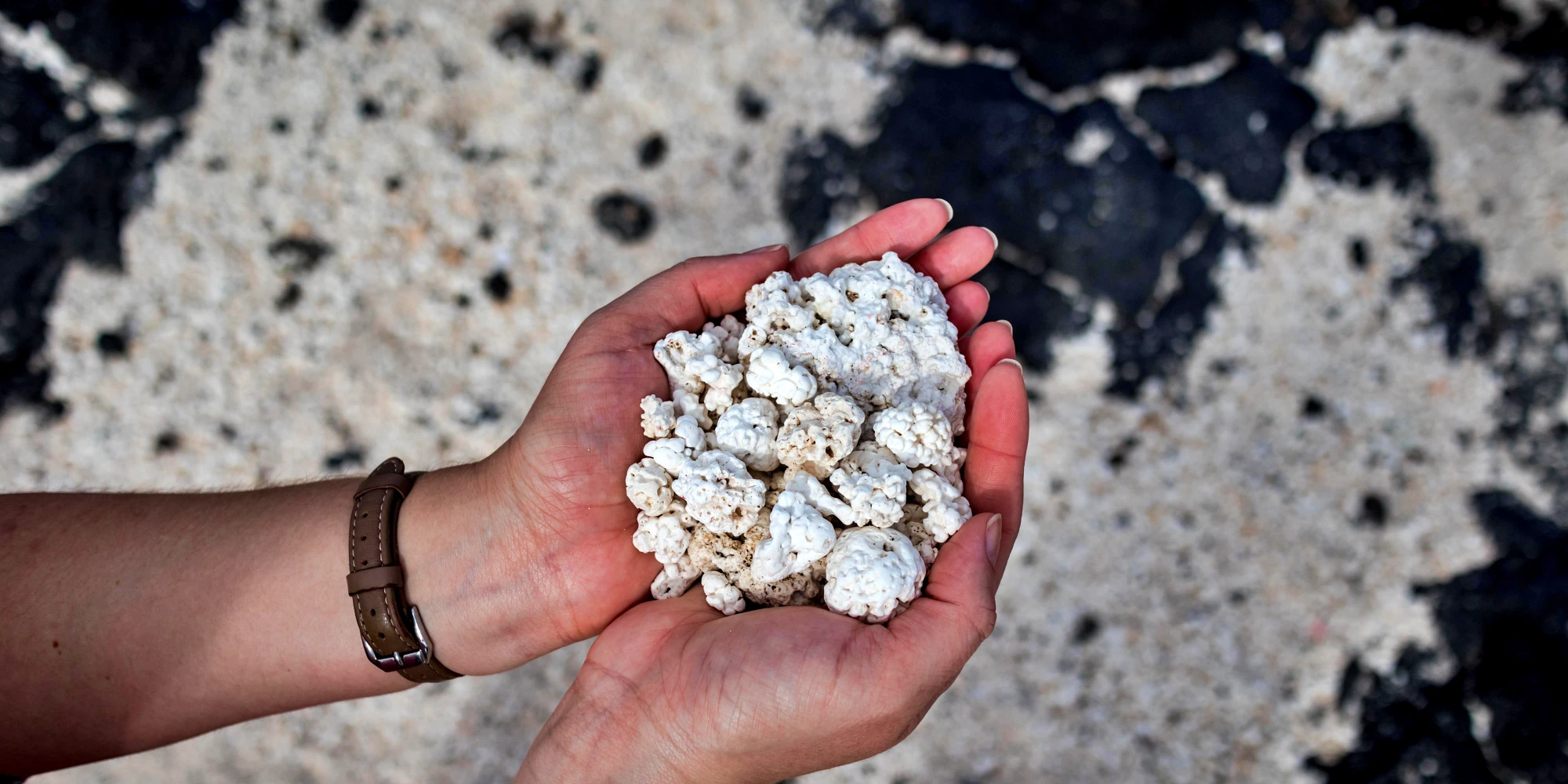
In the north of Fuerteventura, a beach awaits that at first glance looks as if it were covered in fresh popcorn. The so-called Popcorn Beach is one of the most curious natural phenomena of the Canary Islands and a true highlight for curious travelers and photographers.
What looks like crunchy corn kernels is, in reality, not edible at all. The white “popcorn pieces” are made of calcareous algae (red algae of the genus Rhodoliths), which have been shaped over years by the sea and washed ashore. Through waves and friction, they acquire their unusual, popcorn-like structure.
The beach’s official name is Playa del Bajo de la Burra and it is located about ten kilometers northwest of Corralejo, accessible via a dirt track. Due to its extraordinary appearance, it is also known as “Popcorn Beach” or “Popcorn Bay.”
Important for visitors: The calcareous algae are protected by law. Taking the “popcorn pieces” is forbidden and can result in heavy fines, as they play an important role in the ecological balance of the coast. Unfortunately, the beach is increasingly threatened by social media exposure – making respectful behavior toward this natural wonder all the more important.
Our tip: Popcorn Beach is less suitable for swimming, but ideal for a short visit, photos in bright sunlight, and a walk along the rugged northern coast of Fuerteventura.
3. Silbo Gomero – the unique whistled language of La Gomera
If you’re traveling around La Gomera and think someone is whistling at you, you’re probably mistaken. On the second-smallest Canary Island, whistling is not rude at all, but a millennia-old form of communication. This special whistled language is called Silbo Gomero and is unique worldwide.
Silbo Gomero is believed to have originated with the island’s indigenous inhabitants, the Guanches. The language was developed to communicate across La Gomera’s deep ravines and barrancos – over distances of up to five kilometers. Conversations, warnings, or invitations could thus be transmitted effortlessly from mountain to mountain.
The system is not based on words, but on pitch and modulation. Silbo Gomero uses only two vowels and four consonants, which are replaced by different whistling sounds. The crucial element is tonality, which allows entire sentences of the Spanish language to be reproduced.
Even today, Silbo Gomero is by no means extinct: according to estimates, around 20.000 people on La Gomera still speak this extraordinary language. To preserve it, Silbo Gomero has been a compulsory subject in the island’s schools since the 1990s – a worldwide unique educational project.
For its cultural significance, El Silbo Gomero was declared Intangible Cultural Heritage of Humanity by UNESCO in 2009. Visitors can experience the whistled language live at demonstrations, village festivals, or in special cultural centers.
Our tip: Particularly authentic demonstrations can be found in small mountain villages or at the Museo Etnográfico de La Gomera – a real highlight for anyone wanting to discover the culture and curiosities of the Canary Islands.
4. The Columbus Dunes of Maspalomas on Gran Canaria
The impressive dunes of Maspalomas on Gran Canaria are among Spain’s most famous natural attractions. Although they are not officially named after Christopher Columbus, they are still connected to an important chapter of history involving the famous explorer.
The dune complex, covering several hundred hectares along the beach of Maspalomas, resembles a desert landscape rather than Europe. According to historical accounts, Christopher Columbus stopped here in 1502 during his fourth and final voyage to the New World to replenish water and supplies. At the time, the Canary Islands served as an important stopover for Atlantic crossings.
Even though the dunes themselves do not bear his name, Columbus is still present today: the access road to the beach is called Avenida de Cristóbal Colón, commemorating Gran Canaria’s close ties to maritime history.
Today, the Maspalomas dunes are protected as a “Reserva Natural Especial.” To preserve this fragile ecosystem, access to the dunes is only permitted on designated and marked paths. Walking freely through the dune fields is prohibited and can result in fines. However, visitors can still experience and enjoy this unique landscape via official walking routes.
A special highlight is the adjacent lagoon La Charca, an important resting place for migratory birds and another example of the ecological importance of this natural area.
Our tip: The marked paths offer especially impressive views of the dune landscape in the early morning or evening hours – ideal for photos and a nature-friendly holiday experience on Gran Canaria.

5. The protected night sky over Tenerife and La Palma
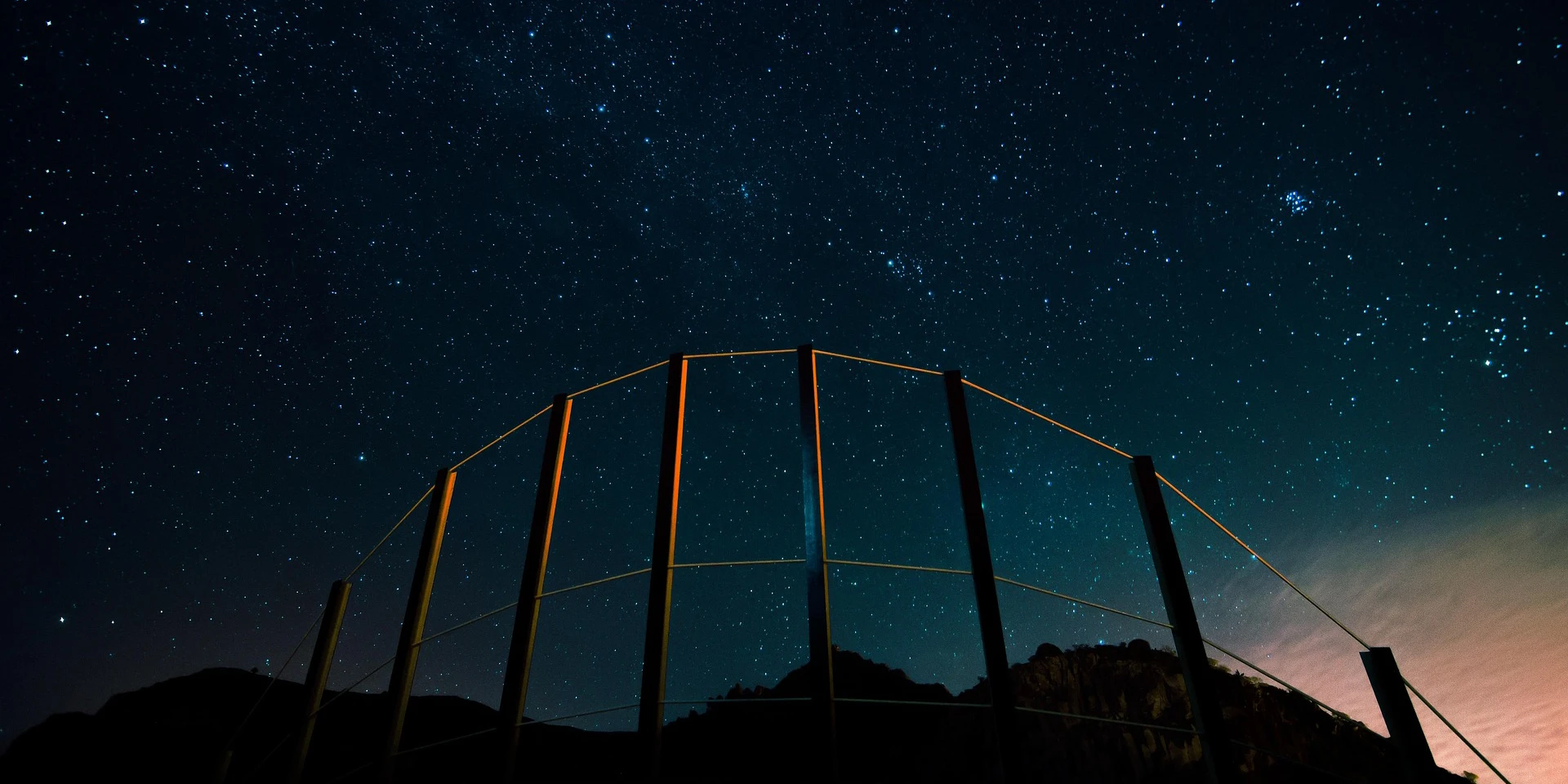
The Canary Islands are not only known for their natural landscapes, but also for something that is rarely protected elsewhere: the sky itself. Especially on Tenerife and La Palma, the night sky is considered one of the clearest and darkest in Europe – and is therefore under special protection.
On Tenerife, the Teide Observatory (Observatorio del Teide) is located at an altitude of around 2.400 meters. Its position above the clouds, dry air, and minimal light pollution make the island an ideal place for astronomical research. Among other instruments, it is home to the GREGOR telescope, the largest solar telescope in Europe, primarily used to study solar activity.

But Tenerife is not alone: On La Palma, the Observatorio del Roque de los Muchachos is one of the most important observatories in the world. International research institutions from Europe, the United States, and other countries operate powerful telescopes here to observe galaxies, stars, and cosmic phenomena. Among astronomers, La Palma is considered one of the best locations worldwide for professional sky observation.
To preserve these exceptional conditions, parts of the Canary Islands – including Tenerife and La Palma – have been designated UNESCO Starlight Reserves. Strict laws regulate street lighting, building heights, and light intensity to minimize light pollution and protect the clear night sky.
For visitors, this is a true highlight as well: guided stargazing tours, astro-tourism experiences, and visitor programs at the observatories offer fascinating insights into the cosmos. Particularly popular are nighttime tours in Teide National Park and private stargazing experiences on La Palma.
Our tip: Plan your stargazing in the Canary Islands around the new moon – then, with clear skies, even the Milky Way can be seen with the naked eye.
6. The abandoned Sanatorio de Abona – the Leper Colony on Tenerife
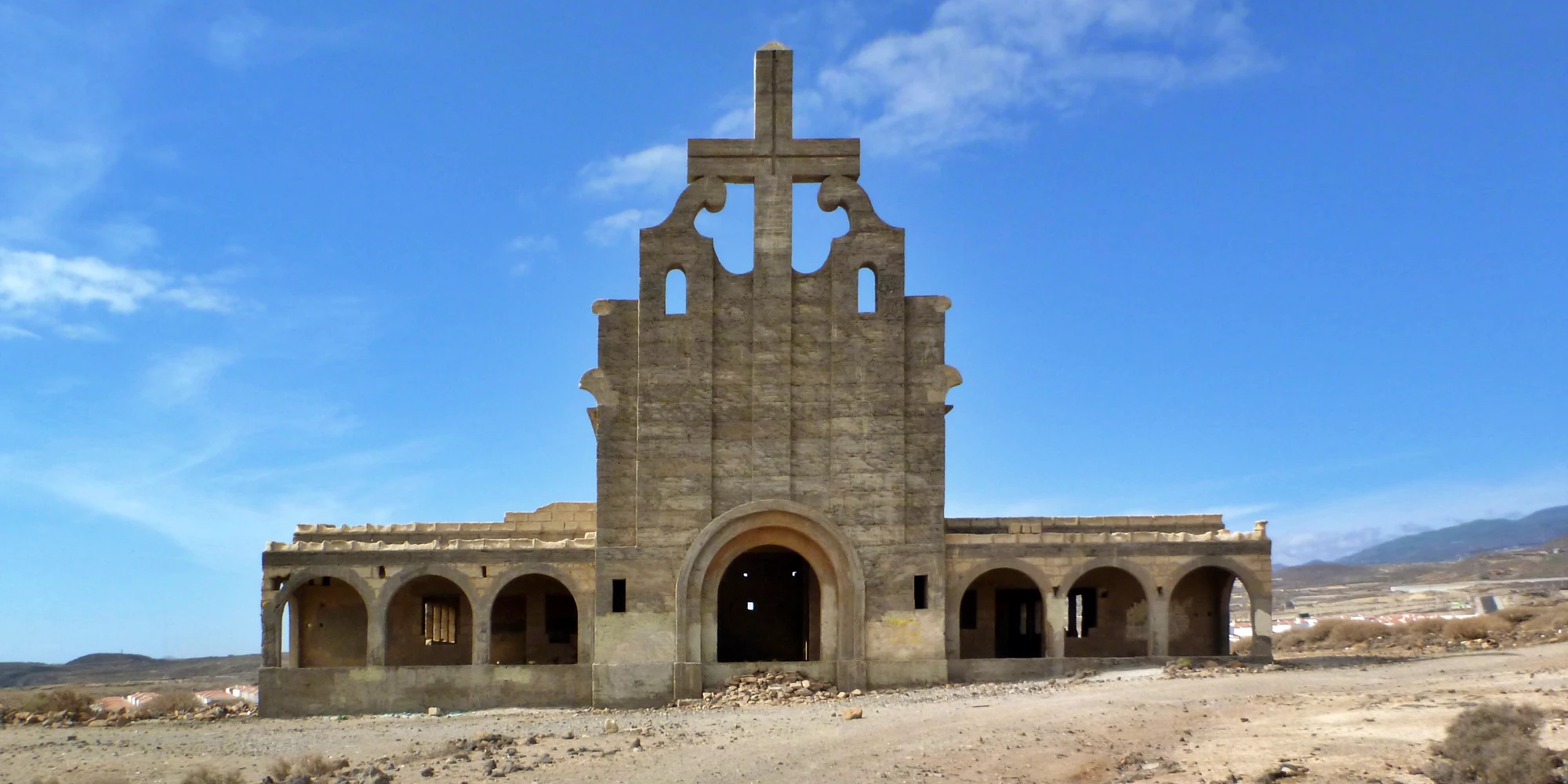
On the southeast coast of Tenerife, far from the usual tourist routes, lies a place with a dark history: the Sanatorio de Abona. Long before “lost places” became a travel trend, one of the most mysterious ruins of the Canary Islands was created here.
After the Spanish Civil War, the number of leprosy cases on Tenerife increased. To isolate those infected, the Franco regime planned the construction of a large sanatorium in the 1940s near what is now the village of Abades. Around 200 patients were to be housed there permanently - cut off from the rest of the population.
The Sanatorio de Abona was designed as a self-sufficient complex. Around 40 buildings were planned, including a hospital, residential houses, a church, administrative buildings, a crematorium, and supply facilities. The site was intended to function like a small, independent town.
But before the project was completed, everything changed: in the early 1950s, an effective drug treatment for leprosy was developed. Isolating patients was no longer necessary, and construction work was abruptly halted. The buildings that had already been erected remained unused and fell into disrepair over decades.
In the years that followed, there were several attempts to repurpose the site. For a time it was used by the Spanish military; later, an Italian investor wanted to turn it into a holiday resort - both plans failed. Today, the sanatorium is officially uninhabited and is considered one of the most famous lost places on Tenerife.
The decaying buildings are now covered with colorful graffiti and street art. Unofficial gatherings, photo shoots, and even small cultural events occasionally take place there. Despite its morbid atmosphere, the site exerts a strong fascination on urban explorers, photographers, and travelers interested in history.
Note: The area is not officially designated as a tourist attraction. Visitors should behave respectfully, avoid damaging buildings, and not underestimate the safety risks posed by the ruins.
7. Drinking water from clouds – Sustainable water harvesting on the Canary Islands
The Canary Islands are considered a paradise for sunseekers - but water is a precious resource here, as rainfall mainly occurs at higher elevations and either seeps into the ground or is stored in underground reservoirs. Nevertheless, creativity and technology have produced a fascinating method: drinking water that literally comes from clouds.
So-called agua de niebla (fog water) is obtained from the moisture of trade wind and fog clouds. Using special fog collectors - large nets or mesh-covered surfaces - the moisture in the air is captured and condensed. The resulting droplets are collected and can be further processed or even bottled as drinking water.
One example of this idea is the company Agua de Niebla Canarias SL, one of the first worldwide to harvest and bottle drinking water from clouds. The technology, based on natural physical processes, requires no external energy and produces neither waste nor emissions - making it a particularly sustainable approach for dry regions with frequent fog. Around 40.000 liters of water can be collected each year - a small but impressive contribution to resource supply on a water-scarce island.
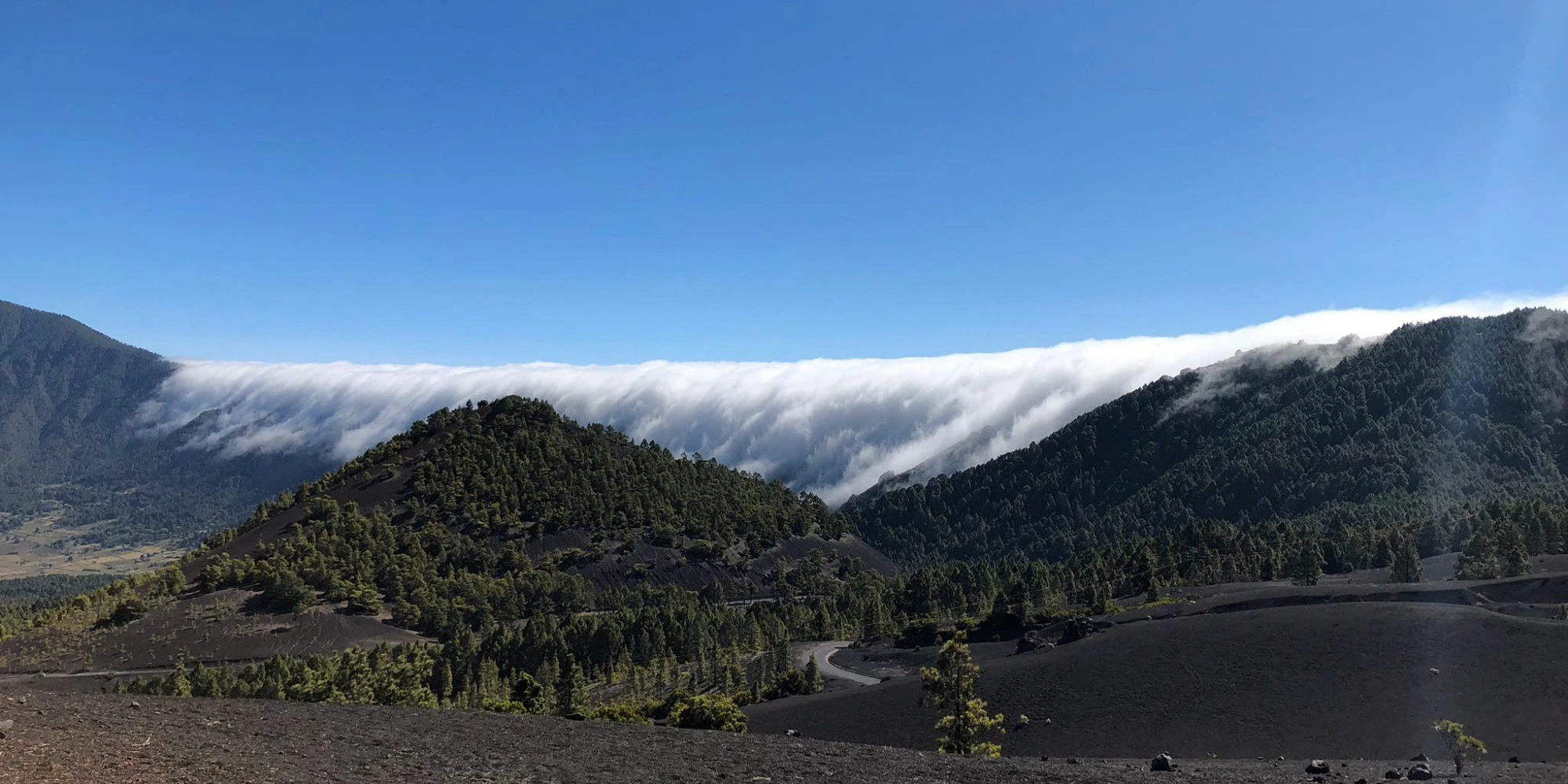
But it’s not only commercial projects that use moisture from the clouds. For years, the Canary Islands have relied on natural fog condensation, where plants such as the native Canary Island pine “comb” water from the trade wind clouds and release valuable moisture into the soil. This form of horizontal precipitation plays an important role in groundwater formation on islands like La Palma and Tenerife.
Especially on La Palma, where the island’s orography causes trade wind clouds to linger regularly in the mountains, this effect helps water seep into the porous volcanic rock, acting as a natural reservoir—an essential factor for the island’s water supply.
Tip: Anyone hiking in the mountainous regions of La Palma or Tenerife can experience the “sea of clouds” firsthand and understand how important this moist air is for the fragile water system of the Canary Islands.
Those who want to discover the quirky sides of the Canary Islands - from cooking over volcanic heat to drinking water from clouds or a millennia-old whistled language - usually venture off the classic tourist paths. It is precisely here that the true diversity and surprising nature of the Canaries reveal themselves. To experience these special places more intensely, it’s worth focusing not only on attractions but also on individual accommodation.
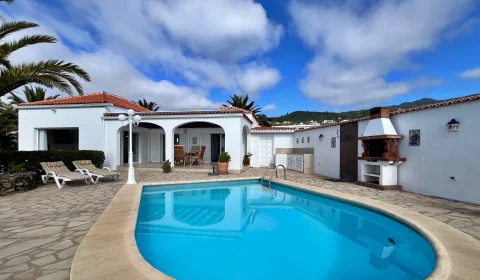
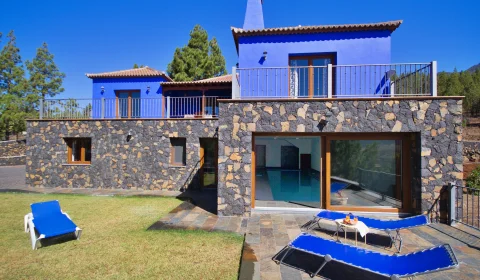
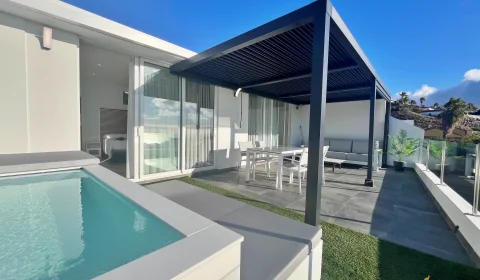
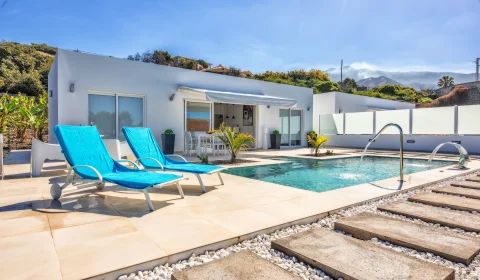
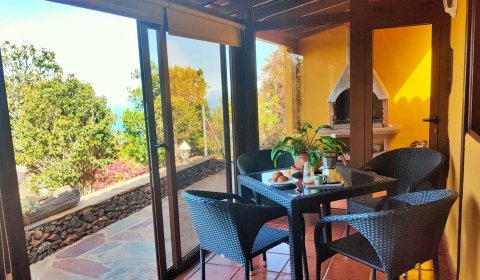
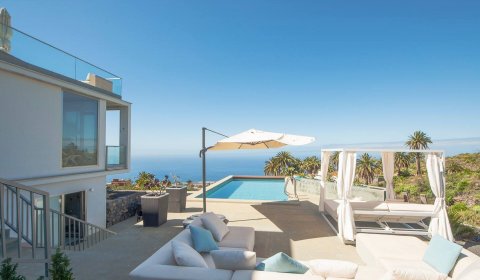
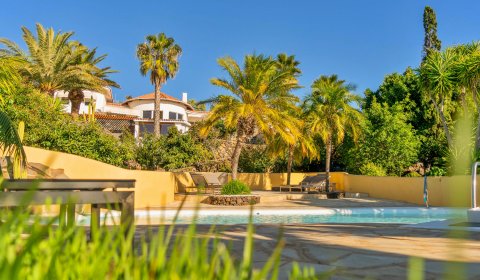
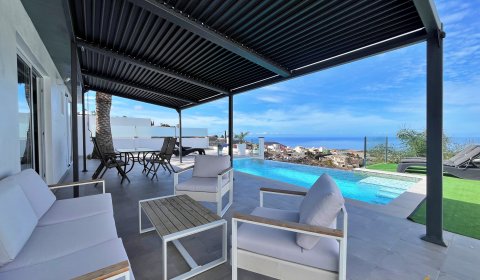
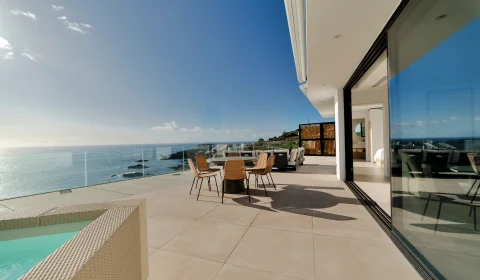
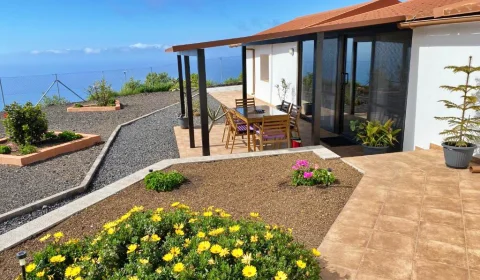
On all islands - from Tenerife, Gran Canaria, Lanzarote, and Fuerteventura to La Palma, La Gomera, and El Hierro - there are holiday homes, fincas, and apartments in extraordinary locations: in volcanic landscapes, above the sea of clouds, near protected natural areas, or close to historic sites with a turbulent past. After a day full of unusual discoveries, evenings here are especially relaxing - with views of the Atlantic, a gentle sea breeze, or under one of Europe’s clearest and most protected starry skies.
Holiday accommodations Canary Islands
Many of the most curious places in the Canary Islands are remote and difficult to reach by public transport. That’s precisely why a rental car offers the greatest freedom to explore the hidden highlights of the Canaries at your own pace. Secluded beaches like the Popcorn Beach on Fuerteventura, viewpoints above the clouds, remote villages, observatories, or abandoned places steeped in history can all be visited flexibly. The drives themselves often become an experience - along coastlines, through lava fields, or across sunny high plateaus.
This is how the quirky and the relaxed come together in the Canary Islands: unusual natural phenomena, surprising stories, and special places meet tranquility, vastness, and a way of life found only on these islands. That’s exactly what makes the Canary Islands a destination that offers far more than just sun and beach.
Ready to discover the unusual sides of the Canary Islands for yourself?
Then now is the perfect moment to plan your trip. Because the Canaries are far more than just sun and beach—they surprise visitors with volcano restaurants, whistled languages, popcorn beaches, protected starry skies, and places rich in history.
Our team knows the islands and their special features from first-hand experience and helps you find accommodation that perfectly matches this unique side of the Canaries - whether close to spectacular landscapes, far from the well-known routes, or right in the heart of nature. This makes your stay the ideal starting point for extraordinary discoveries.
Whether you hike through volcanic landscapes in the morning, explore quirky natural phenomena in the afternoon, or enjoy the sunset over the Atlantic in the evening - we make sure you feel at home on the Canary Islands from the very first moment.
Let our Canary Islands experts advise you and experience the islands from their most surprising, curious, and authentic side.
Email:
Phone: +34 675 400 700