DE
 EN
 ES
The Canary Islands are famous for their dream beaches, impressive volcanic landscapes, and mild climate all year round. But did you know that they also played a key role in one of the most significant chapters in world history?
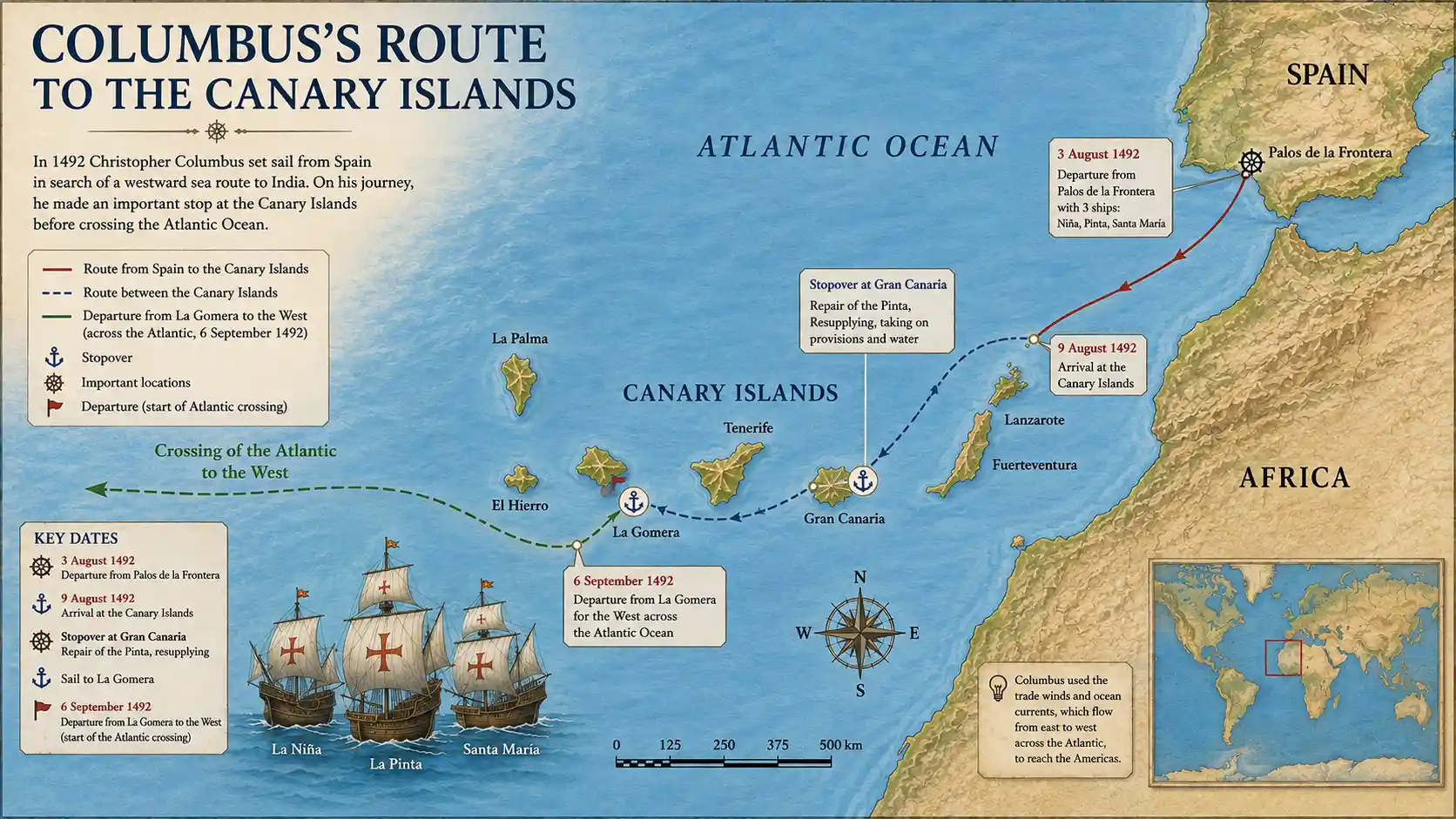
Before Christopher Columbus crossed the Atlantic in 1492 and permanently connected Europe and America, he stopped on several of the Canary Islands. His journey first took him to Gran Canaria and then to La Gomera, from where he set off on the famous Atlantic crossing.
To this day, historic buildings, museums, and monuments commemorate this period. At the same time, numerous legends surround his stay on the islands. Some stories are historically documented, while others are more in the realm of myths. This is precisely what makes the Columbus Route on the Canary Islands so fascinating.
If you want to experience history up close, you can still follow in the footsteps of the famous explorer today. This article takes you along his journey and shows you the most important places, their history, and the sights you can visit today.
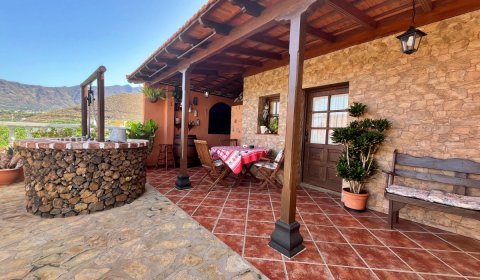
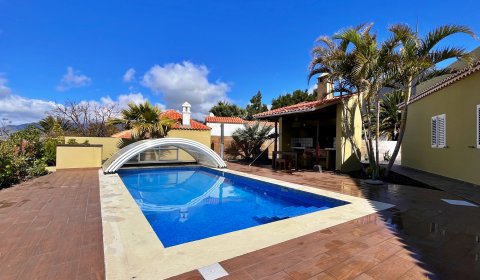
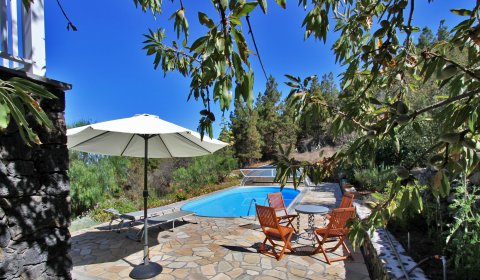
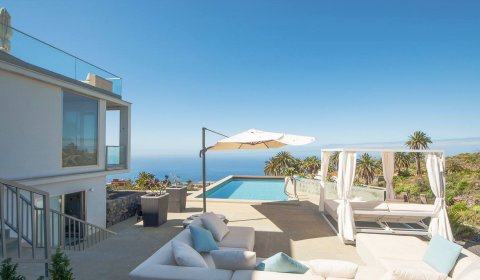
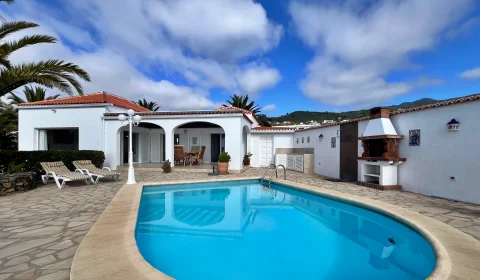
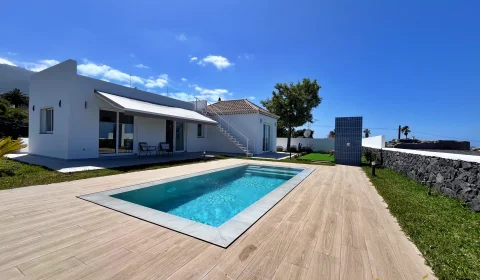
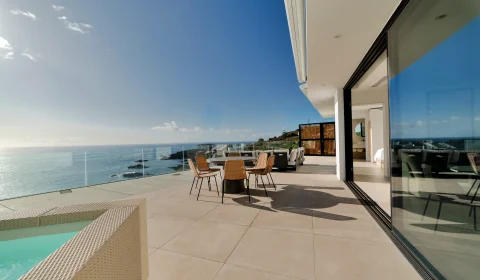
Discover holiday accommodations on the Canary Islands
Why did Christopher Columbus stop on the Canary Islands?
On August 3, 1492, Christopher Columbus set sail with his three ships – the Santa María, the Pinta, and the Niña – from the port of Palos de la Frontera in southern Spain. His goal was to find a western sea route to India. Instead, his expedition was to change world history.
However, just a few days after setting sail, the fleet had to make its first stop. The Pinta had problems with its rudder, which had to be repaired. In addition, the crew and ships needed fresh water, food, wood, and other supplies for the long crossing of the Atlantic.
The Canary Islands were the ideal place for this. They lay on the natural route of seafarers and offered not only safe anchorages but also the crucial advantage of the northeast trade winds. These steady winds reliably carried sailing ships from the Canary Islands towards the Caribbean – an advantage that Columbus deliberately made use of.
Even today, many sailing yachts follow almost the same route when crossing the Atlantic.
Which Canary Islands did Columbus visit?
Not every island in the archipelago played the same role for Columbus. Historically well documented are above all his stays on Gran Canaria and La Gomera during his first voyage. In addition, Lanzarote, Tenerife, and El Hierro are also mentioned in connection with his later voyages.
The most important stops along the Columbus Route are:
- Gran Canaria – repairs to the Pinta and supplies for the fleet
- La Gomera – final preparations before the Atlantic crossing
- Lanzarote – probably sighted or briefly visited
- Tenerife – point of orientation and a stop on later voyages
- El Hierro – played an important role in navigating the Atlantic
Gran Canaria and La Gomera in particular are considered the heart of the historic Columbus Route today.
Stop 1: Gran Canaria – The beginning of the final preparations
After reaching the Canary Islands, Columbus steered his fleet towards Gran Canaria. The stop was necessary because the Pinta had to be repaired. Historical sources report that the rudder in particular was damaged and required extensive repairs.
At that time, Gran Canaria was already an important base of the Spanish Crown. The island was strategically located between Europe, Africa, and the Atlantic and quickly developed into an important center for trade and shipping.
For Columbus, however, the stay was much more than a repair stop. Here, the final phase of the journey's preparations began. Food supplies were replenished, water barrels were filled, and the ships were prepared for the weeks-long crossing.

Las Palmas de Gran Canaria – A city steeped in history
Anyone who wants to follow in the footsteps of Columbus today should ideally begin their journey in Las Palmas de Gran Canaria. The island's capital is one of the oldest cities on the Canary Islands and is home to the beautiful historic district of Vegueta.
As you stroll through the cobblestone streets, it is easy to imagine yourself transported back to the late 15th century. Magnificent stone houses, small courtyards, and historic squares still provide an impression of what Las Palmas may have looked like during Columbus' time.
Some of the most beautiful sights include:
- Plaza de Santa Ana
- Santa Ana Cathedral
- the narrow streets of Vegueta
- historic courtyards
- numerous small cafés and restaurants
Today, the historic district is part of the cultural heart of the island and is wonderful to explore on foot.
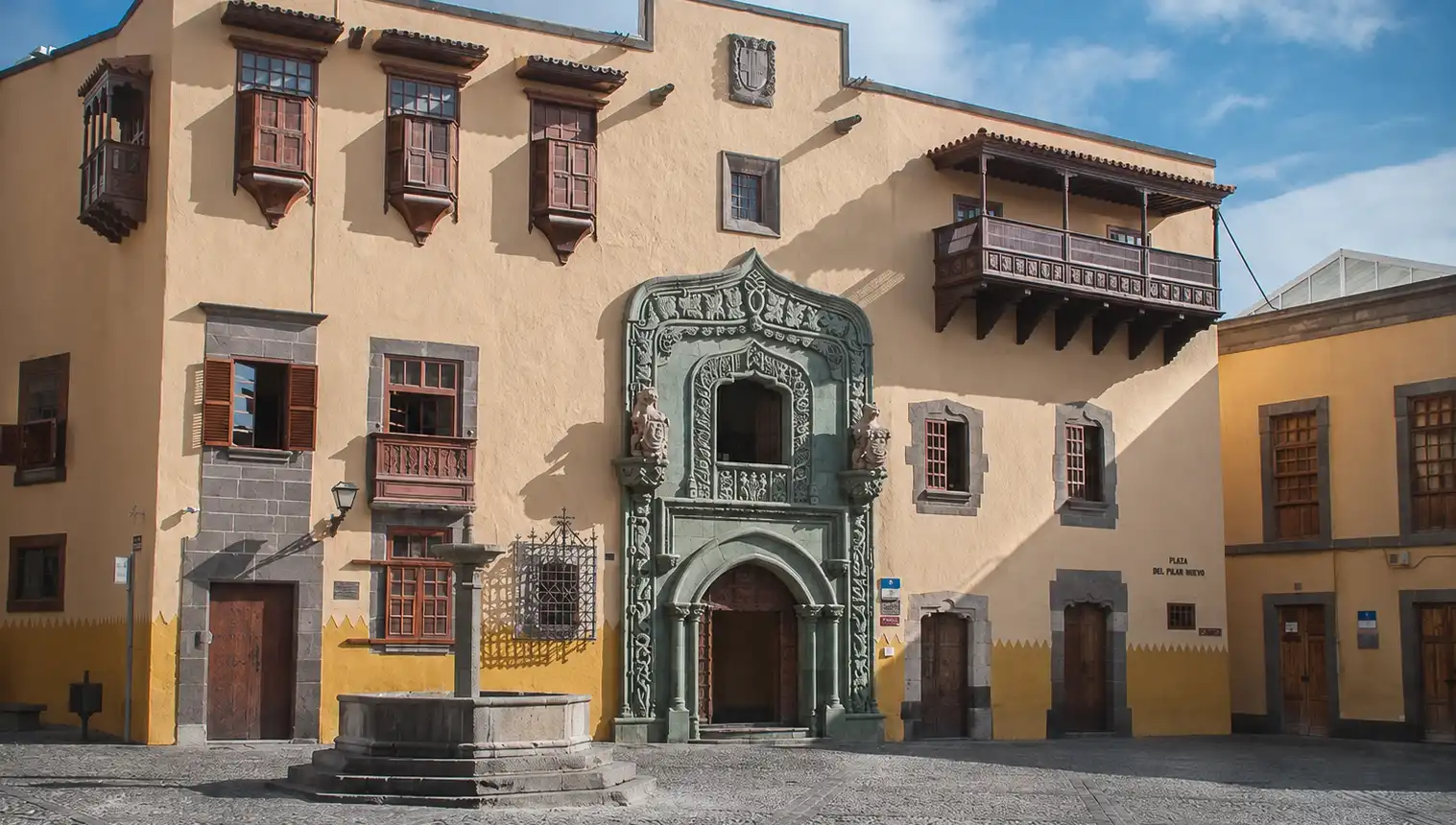
Casa de Colón – The most important Columbus Museum on the Canary Islands
A highlight of any Columbus Route is the Casa de Colón in Vegueta. The museum commemorates Christopher Columbus' stays on Gran Canaria and explores the history of the great voyages of discovery.
It is often claimed that Columbus stayed overnight in this exact building. However, this cannot be conclusively proven historically. What is certain, however, is that important administrative buildings already stood on this site in the 15th century, and Columbus had close contact with the authorities of the time.
Today, one of the most interesting museums on the Canary Islands awaits you here.
The exhibitions include:
- detailed models of the famous caravels
- historic nautical charts
- navigational instruments
- paintings depicting the discovery of America
- information about the connection between Europe and the New World
- temporary special exhibitions
Particularly fascinating is the explanation of why the Canary Islands became the ideal starting point for crossing the Atlantic.
The importance of the trade winds
One of the most important reasons for the stop on the Canary Islands had nothing to do with repairs or provisions, but with nature.
Between approximately 20 and 30 degrees north latitude, the northeast trade winds blow all year round. These consistent winds enabled sailing ships to cross the Atlantic relatively safely.
Columbus knew about this natural phenomenon. By first sailing to the Canary Islands and only then heading west, he made optimal use of the prevailing wind conditions. Without these winds, the journey would have been considerably more difficult.
Even today, many Atlantic regattas and long-distance sailors set off from the Canary Islands towards the Caribbean, following a route that was already successfully used more than 500 years ago.
Was Lanzarote also part of the Columbus route?
The question of whether Christopher Columbus also visited Lanzarote comes up time and again. The answer is not entirely clear.
Some historical sources suggest that his fleet sighted the easternmost Canary Island or possibly made a brief stop there. Other sources do not mention Lanzarote at all or assume that Columbus headed directly for Gran Canaria.
Historians therefore still do not completely agree on the matter. What is certain, however, is that due to its location, Lanzarote was often the first island reached by ships coming from Europe. For this reason, it already played an important role in Atlantic navigation in the 15th century.
Even though a longer stay by Columbus there cannot be conclusively documented, Lanzarote is considered by many historians to be part of the wider Columbus Route on the Canary Islands.
Stop 2: La Gomera – The last European stop before America
After the repairs on Gran Canaria, Christopher Columbus continued his journey and headed for La Gomera. The second-smallest of the western Canary Islands would prove to be the most important stop before the Atlantic crossing.
In San Sebastián de La Gomera, Columbus stayed for several weeks. Here, the final preparations for the expedition were made before the fleet finally set course across the Atlantic on September 6, 1492.
Unlike on Gran Canaria, there were no major repairs to be carried out on La Gomera. Instead, the focus was on supplying the crew and making the best possible preparations for a journey into the unknown. Water barrels were filled, food supplies replenished, and the ships inspected one final time.
Today, San Sebastián de La Gomera is considered one of the most authentic historic places on the Canary Islands. Numerous sights commemorate the famous seafarer and bring this history to life for visitors.
San Sebastián de La Gomera – Where history comes to life
Although San Sebastián is the island's capital, it has preserved its original charm to this day. White houses with traditional wooden balconies, narrow streets, and small squares characterize the townscape.
Since most of the historic sights are located in the center, you can easily explore them on foot. Almost every corner tells a story from the era of the great voyages of discovery.
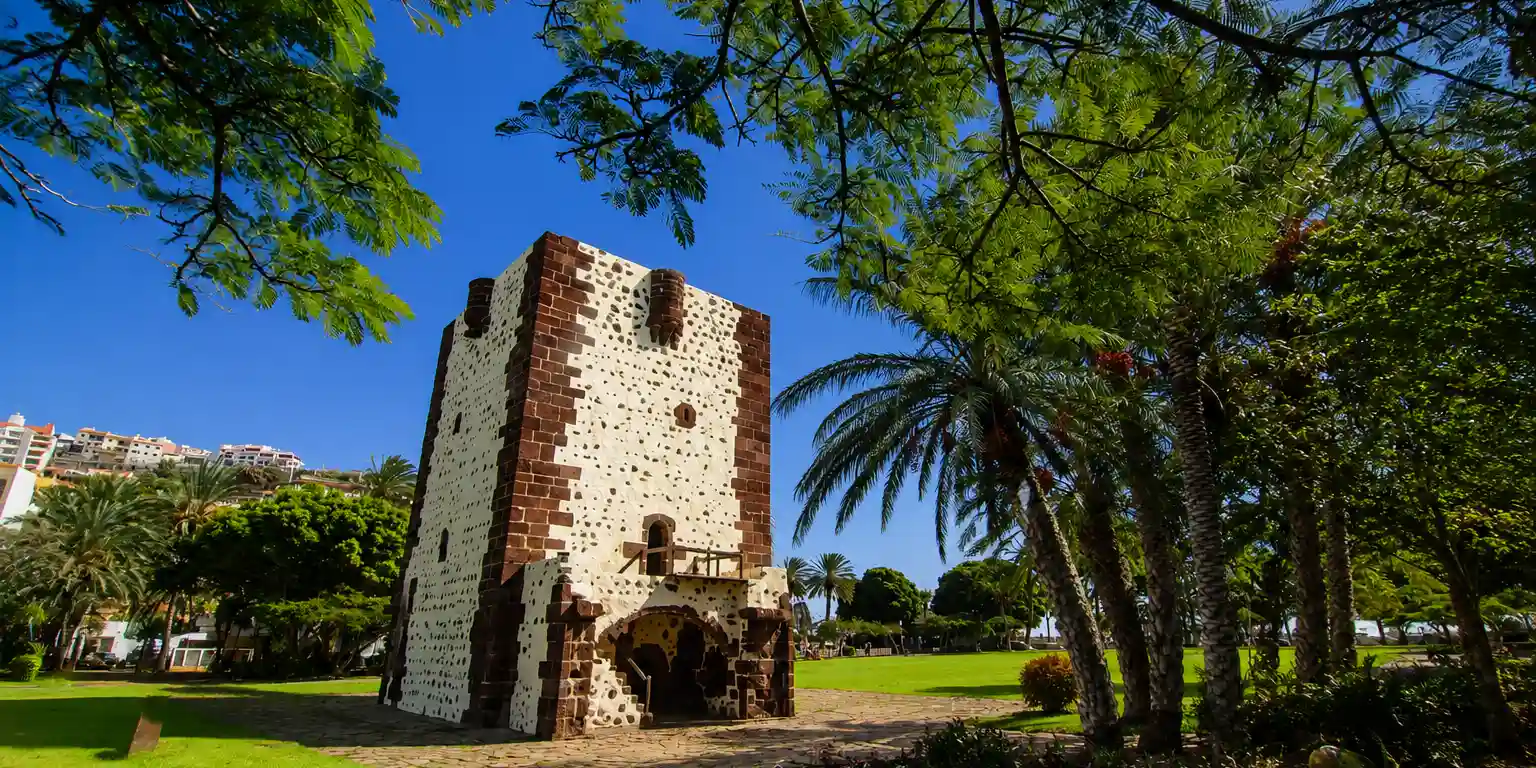
Torre del Conde – The oldest military structure on the Canary Islands
One of the most famous landmarks is the Torre del Conde. The square defensive tower was built in the 15th century and is considered one of the oldest surviving fortifications on the Canary Islands.
At the time of Columbus, the tower was the seat of the island's administration and also served to protect against pirate attacks. Even though Columbus himself probably did not spend a significant amount of time here, the Torre del Conde was already part of the center of political life on La Gomera at that time.
Today, the fortress is located in a small park and is one of the island's most popular photo spots.
Casa de Colón in San Sebastián
La Gomera also has a Casa de Colón. The historic building commemorates the seafarer's stay on the island and features various exhibitions on the history of the Atlantic crossing.
It is often claimed that Columbus lived here. However, there is no definitive historical evidence for this. It is more likely to be a place that symbolically commemorates his stay.
At the museum, you will learn, among other things:
- how the expedition's ships were equipped,
- what challenges an Atlantic crossing presented in the 15th century,
- what significance La Gomera had for the voyages of discovery,
- how trade between Europe and America developed.
Especially for those interested in history, the museum is a worthwhile stop.
Pozo de la Aguada – The Island's most famous fountain
Just a few steps away is the Pozo de la Aguada, one of the best-known places along the Columbus Route.
According to legend, this was exactly where the water barrels were filled that Columbus and his crew took with them on their journey west.
Whether this actually happened here can no longer be conclusively proven today. Nevertheless, over the centuries the well has become a symbol of the Atlantic expedition and is one of the most visited sights in San Sebastián.
Iglesia de la Asunción
The Iglesia de la Asunción is also closely associated with the history of Columbus. According to tradition, Columbus attended a service here before his departure and prayed for protection for the journey ahead.
The present-day church has been rebuilt several times, but still contains architectural elements dating back to the 15th century. Particularly worth seeing are the simple nave and the artistically carved coffered ceiling.
Even those who are less interested in architecture can sense the special atmosphere of a place that has been associated with the history of the discovery of America for centuries.
Beatriz de Bobadilla – The ruler of La Gomera
No story about Columbus on La Gomera is complete without the name Beatriz de Bobadilla. She was the ruler of the island and played an important role during his stay. Since Columbus spent several weeks on La Gomera, it is very likely that the two were regularly in contact with each other.
Numerous legends surround their relationship. One particularly popular story claims that the two had a love affair.
However, there is no historical evidence for this. The story probably originated many years later. Nevertheless, it remains one of the best-known anecdotes associated with the Columbus Route to this day.
Setting off into the unknown
After all the preparations had been completed, the three ships raised anchor in the port of San Sebastián on September 6, 1492.
A journey whose outcome no one knew lay ahead of the crew. For weeks, the sailors saw nothing but water and sky. Many feared they would never return. Columbus repeatedly had to motivate and reassure his crew as uncertainty grew.
On October 12, 1492, the expedition finally reached an island in the Bahamas. Columbus believed that he had reached India – in reality, he had landed on a continent that had been largely unknown to Europe until then.
With this, a new chapter in world history began.

Why La Gomera is still inseparably linked to Columbus
Of all the Canary Islands, La Gomera is probably the one most closely associated with Christopher Columbus. He spent the final weeks before his historic Atlantic crossing here, the ships were supplied with water and food here, and it was from here that the actual journey to the New World began.
That is why the island still commemorates this period with museums, monuments, and historic buildings. At the same time, San Sebastián is not an artificially created tourist setting. Many of its streets and squares have preserved their original character and still provide an impression of what the island may have looked like at the end of the 15th century.
Myth or truth? Fascinating stories surrounding Columbus
Numerous stories circulate about Columbus. Some are historically documented, while others belong more to the realm of legends.
Some of the best-known myths include:
- Columbus lived in what is now the Casa de Colón.
- He had a romantic relationship with Beatriz de Bobadilla.
- The water from the Pozo de la Aguada was actually transported all the way to the Caribbean.
- The crew believed they would fall off the edge of the Earth.
Historians assess these stories differently. What is certain, however, is that they continue to contribute to the fascination surrounding the Columbus Route and attract visitors from all over the world to La Gomera.
Other Canary Islands and Columbus' later voyages
Although Gran Canaria and La Gomera are the best-known stops of the first voyage, Christopher Columbus visited the Canary Islands several times in total. Between 1492 and 1504, he made four voyages to the New World and repeatedly used the archipelago as an important stopover.
Historical records show that the Canary Islands played a central role in Spanish maritime navigation due to their strategic location. Harbors were used to supply ships, while the favorable wind conditions made the islands an ideal starting point for voyages across the Atlantic.
Tenerife – Navigating by Mount Teide
Tenerife also played an important role in navigation during the 15th and 16th centuries. The mighty Mount Teide, at 3,715 meters the highest mountain in Spain, was visible to sailors from a great distance. It served as a natural landmark on the way to the Canary Islands.
It is not conclusively documented whether Columbus went ashore on Tenerife during his first voyage. What is certain, however, is that he knew the island from the sea and probably passed it again on later voyages.
Today, you can visit Teide National Park in Tenerife and understand why the volcano has been one of the most distinctive landmarks of the Atlantic for centuries.
El Hierro – The end of the known world
The westernmost Canary Island, El Hierro, was long considered the “end of the known world” in antiquity. Later, it served cartographers as a reference point, which is why many old maps placed the so-called prime meridian through El Hierro.
Although Columbus probably did not stop on the island during his first voyage, its location was of great importance for navigation in the Atlantic. It demonstrates how closely the history of the Canary Islands is connected to the development of seafaring.

Experience the Columbus route yourself today
The historic route can still be explored easily today. It combines culture, history, and the scenic diversity of the Canary Islands.
A possible itinerary could look like this:
Day 1: Las Palmas de Gran Canaria
- Walk through Vegueta
- Visit the Casa de Colón
- Plaza de Santa Ana
- Santa Ana Cathedral
- Dinner at a traditional restaurant
Day 2: Discover Gran Canaria
- Historic sites around Las Palmas
- Explore the port area
- Visit other museums or markets
Day 3: Travel to La Gomera
- Travel by ferry or plane (the ferry connection usually goes via Tenerife)
- Walk through San Sebastián
- Torre del Conde
- Pozo de la Aguada
Day 4: Explore San Sebastián in depth
- Casa de Colón
- Iglesia de la Asunción
- Harbor promenade
- Historic old town
If you have more time, it is also worth taking a trip to Tenerife to discover Teide National Park and other historic sites.
Why the Canary Islands are so important to world history
The Canary Islands were far more than just a stopover on Columbus' journey. They developed into an important hub between Europe, Africa, and America. For many decades, expeditions, trading voyages, and scientific ventures set out from here.
The discovery of America permanently changed the world. Trade routes emerged, cultures encountered one another, and new economic connections were established. The Canary Islands were often at the beginning of these developments.
Today, anyone visiting the historic sites can gain a fascinating insight into this era and understand why the islands continue to hold a special place in history.
Practical tips for your journey along the Columbus route
To make your trip in the footsteps of Christopher Columbus a truly special experience, these tips can help:
Best time to visit
Thanks to the mild climate, you can explore the Columbus Route all year round. Spring and autumn are particularly pleasant, when temperatures range between 20 and 26 degrees and the sights tend to be less crowded.
How much time should you plan?
At least one day is recommended for Las Palmas de Gran Canaria. If you also want to visit museums and stroll through Vegueta, you should plan for two days.
San Sebastián de La Gomera can be explored comfortably in one day. If you want to enjoy the relaxed atmosphere, it is best to stay on the island for two nights.
What should you bring?
- Comfortable shoes for cobblestone streets
- Sun protection
- Water bottle
- Camera or smartphone
Frequently Asked Questions about the Columbus Route on the Canary Islands
Which Canary Island did Columbus visit first?
During his first voyage, Columbus headed for Gran Canaria after arriving in the archipelago. Whether Lanzarote was briefly visited beforehand or merely sighted remains disputed among historians to this day.
Why did Columbus stop on the Canary Islands?
The ships needed repairs, the crew needed fresh water and food, and the favorable trade winds provided ideal conditions for crossing the Atlantic.
From which Island did Columbus set off for America?
The final departure took place on September 6, 1492, from San Sebastián de La Gomera.
Can you follow the Columbus route today?
Yes. Gran Canaria and La Gomera in particular offer numerous historic sights, museums, and monuments commemorating Columbus' stay.
Is the Columbus route also worthwhile for families?
Yes. The route combines history with relaxed walks through historic old towns and is therefore also suitable for families with older children who are interested in voyages of discovery and seafaring.
Conclusion: The Columbus Route on the Canary Islands is much more than a journey to historic buildings. It takes you to the places where one of the most significant expeditions in world history was prepared. In the streets of Vegueta, at the harbor of San Sebastián, or in front of the Torre del Conde, history comes to life and shows the central role the Canary Islands played in the discovery of the New World.
At the same time, this route combines culture, nature, and history in a unique way. You will discover impressive historic old towns, visit fascinating museums, and learn why the Canary Islands remain an important hub in the Atlantic to this day.
Whether you are passionate about history, planning a cultural excursion during your holiday, or simply want to discover the islands from a new perspective – the Columbus Route is a fascinating journey through more than 500 years of history and shows that the Canary Islands have far more to offer than sun and beaches.
Ready to discover the Canary Islands?
Then start your holiday on the Canary Islands with us!
We arrange carefully selected holiday homes, fincas, apartments, and villas on all the Canary Islands – tailored to your wishes and needs.
Whether you are looking for a holiday home with a private pool, a holiday apartment close to the beach, or a finca surrounded by nature – together, we will find the perfect home for your dream holiday.
Thanks to our many years of experience, we know the Canary Islands inside out and are happy to advise you on which island and which region best suit you. This way, your holiday will not only be relaxing but also become an unforgettable experience.
Contact us now for a no-obligation consultation. Together, we will find the perfect accommodation for your well-deserved holiday on the Canary Islands!
Email:
Phone +34 675 400 700