DE
DE  EN
EN  ES
ES Why is La Gomera considered one of the most unspoiled and fascinating islands of the Canaries – and why should you absolutely discover it for yourself?
La Gomera is different. While many travelers think of long sandy beaches, large hotel complexes, and party hotspots when they hear “Canary Islands”, this small island surprises visitors with its authenticity, tranquility, and spectacular nature. Anyone looking to slow down, stay active, or deeply immerse themselves in local culture will find a true gem here. In this article, you’ll discover 10 good reasons why a trip to La Gomera is worthwhile - whether you’re a hiking enthusiast, a nature lover, or simply seeking relaxation.
1. Unique natural and volcanic landscapes
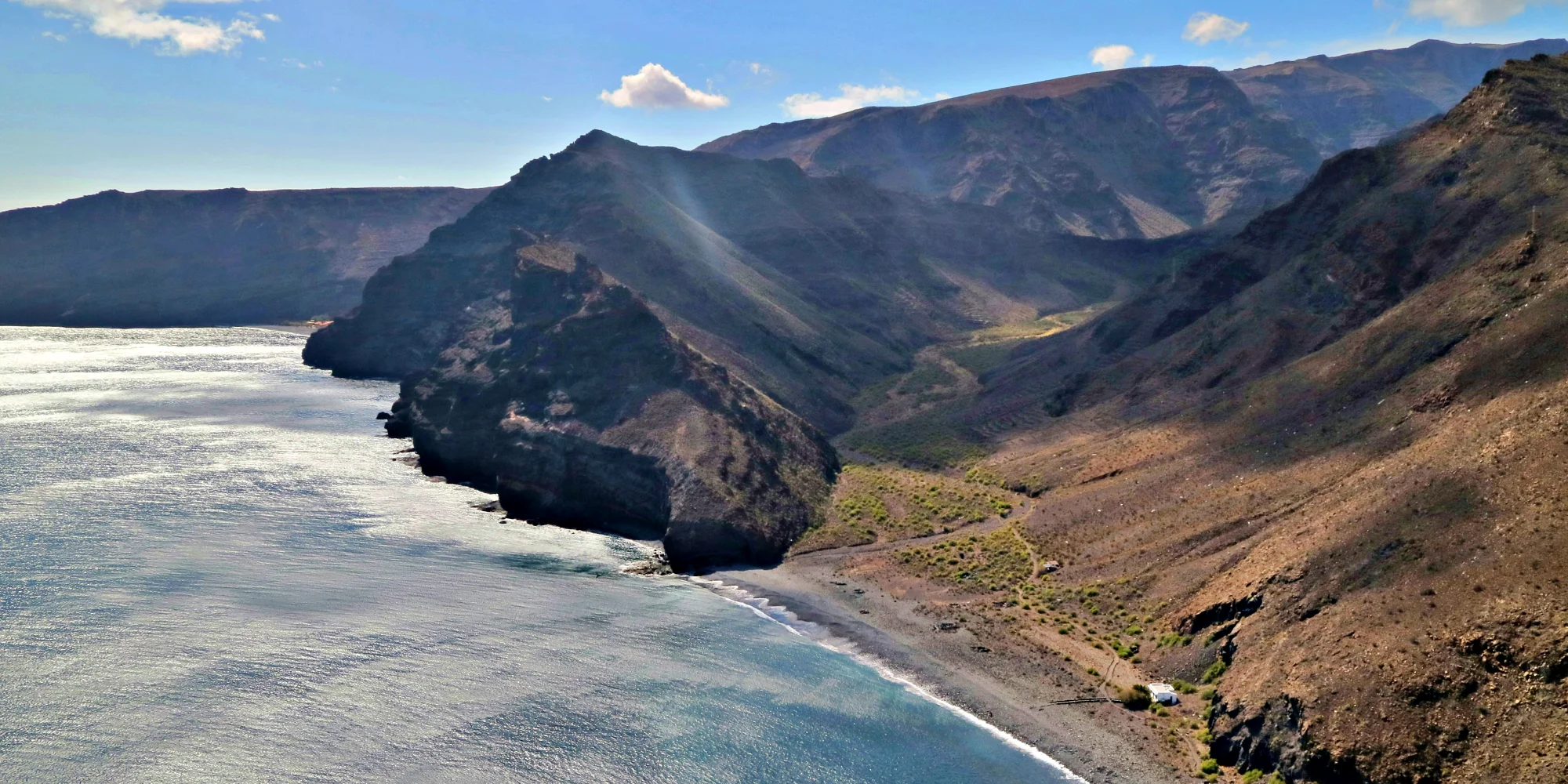
La Gomera captivates visitors with a landscape so diverse that it’s hard to believe you’re on a relatively small island. Deep ravines (known as barrancos), rugged rock formations, ancient volcanic remnants, and lush valleys shape the scenery.
Particularly impressive is the contrast between the dry coastal regions and the humid, almost mystical interior of the island. In some places, you feel more like you’re in an enchanted fairytale forest than on an island in the Atlantic. This diversity of landscapes makes every exploration a new experience.
2. The legendary Garajonay National Park
The green heart of the island is undoubtedly Garajonay National Park, a UNESCO World Natural Heritage site that covers around ten percent of the island’s total area. Located in the center of La Gomera, it forms a unique ecosystem that now exists in only a few places worldwide. Here you’ll find one of the last continuous laurel forests on Earth—a remnant from the Tertiary period, a time when large parts of Europe were covered by similar forests.
A special natural phenomenon in the park is the so-called trade wind mist. Moist air masses from the Atlantic get caught on the mountains and supply the forest with moisture all year round. This creates a permanently green, almost mystical landscape with moss-covered tree trunks, ferns, and lichens that blanket the forest like a natural carpet. These constant conditions make Garajonay an ideal habitat for numerous endemic plant and animal species.
For visitors, the park offers an excellently developed network of hiking trails. Clearly marked routes lead through dense forests, across ridges, and to impressive viewpoints. Whether short walks or extended day hikes—the national park caters to different fitness levels. Another advantage is the mild climate: while temperatures along the coast can be warm, it is noticeably cooler in the park, making hikes very pleasant even in summer.
Beyond its natural beauty, Garajonay is closely linked to the culture and mythology of the island. Its name comes from an ancient legend about the lovers Gara and Jonay, whose tragic story remains an integral part of local identity to this day. The national park therefore combines nature, history, and spirituality in a unique way - a place that doesn’t just impress visitors, but leaves a lasting emotional impact.
3. A paradise for hikers and active travelers
La Gomera is rightly considered one of the best hiking islands in Europe. A dense network of more than 600 kilometers of well-marked hiking trails runs across the entire island, making it a true Eldorado for active travelers. The routes range from relaxed walks through palm groves to challenging day hikes with an almost alpine character. Particularly appealing is the enormous variety of landscapes, often experienced within just a few kilometers.
Hikes that lead from the cooler highlands of the island’s interior down to the coast are especially popular. These routes not only offer spectacular panoramic views of the Atlantic but also striking contrasts between green laurel forests, terraced farmland, and barren volcanic landscapes. Classic routes include stages around Garajonay National Park or old connecting paths between remote mountain villages.
Popular hiking routes on La Gomera
Among the most well-known and beautiful routes are:
The long-distance hiking trail GR 131, which crosses the island from north to south and offers challenging yet spectacular stages
Routes in Garajonay National Park, such as circular hikes through the laurel forest with viewpoints like Alto de Garajonay
Descents into Valle Gran Rey, which are especially popular with experienced hikers, as they involve overcoming significant differences in altitude
These trails often follow historic paths that were once used by the local population and have retained their original character to this day.
When are guided hikes recommended?
Guided hikes on La Gomera are particularly recommended for longer or more demanding tours. They are especially useful:
on hikes through the dense laurel forest, as fog and branching paths can quickly become confusing
on high-altitude and ridge trails, where weather changes are often underestimated
for first-time visitors who want to learn more about the island’s flora, fauna, and history
Local guides not only know the safest routes but also share fascinating background knowledge about endemic plants, ancient legends, and the traditional use of the landscape. Many tours are offered in small groups and are suitable for both beginners and experienced hikers.
Active holidays beyond hiking
In addition to hiking, La Gomera offers excellent conditions for other outdoor activities. Mountain bikers find varied routes away from paved roads, trail runners appreciate the demanding elevation profiles, and climbing enthusiasts discover interesting routes on the island’s rock faces. Thanks to low traffic and the absence of mass tourism, sporting activities here can be enjoyed in a particularly close-to-nature and relaxed way.
Anyone who enjoys being active on holiday, likes spending time outdoors, and seeks intense nature experiences will find ideal conditions on La Gomera – authentic, varied, and far removed from overcrowded hiking regions.
4. Tranquility, deceleration, and little mass tourism
One of La Gomera’s greatest advantages is its tranquility. Large hotel complexes and loud entertainment centers are nowhere to be found. Instead, small hotels, guesthouses, and holiday homes dominate.
The relaxed atmosphere makes the island perfect for anyone looking to escape everyday stress. Time moves more slowly here – and that is exactly what many visitors appreciate. La Gomera is a place where you relearn how to enjoy the moment.
5. Authentic Canarian culture and way of life
On La Gomera, Canarian culture is still very much alive. In small villages, locals gather in the evenings, tell stories, and maintain traditions that have long since disappeared on other islands.
A particularly special cultural heritage is the whistled language El Silbo, which residents once used to communicate across deep ravines. This unique language is still taught and preserved today. Anyone interested in authentic culture will experience a very original side of the Canary Islands on La Gomera.
6. Culinary delights from regional ingredients
La Gomera’s cuisine is down-to-earth, fresh, and surprisingly diverse. Many dishes are based on regional products such as goat cheese, sweet potatoes, fish, and tropical fruits.
Particularly typical are:
Almogrote, a spicy cheese paste
Papas arrugadas with mojo sauce
Fresh fish straight from the Atlantic
In small, family-run restaurants, you can taste the love for tradition. Anyone who enjoys eating local and honest food will fall in love with La Gomera’s cuisine.
7. Mild climate all year round – ideal for any season
Thanks to its subtropical climate, La Gomera is an attractive travel destination all year round. Temperatures usually range between 20 and 28 degrees Celsius, with higher elevations being more pleasant and cooler.
While summer is perfect for beach and active holidays, autumn, winter, and spring are excellent for hiking. Even during the European winter months, you can soak up the sun here and escape the gray weather.
8. Breathtaking viewpoints and photo spots
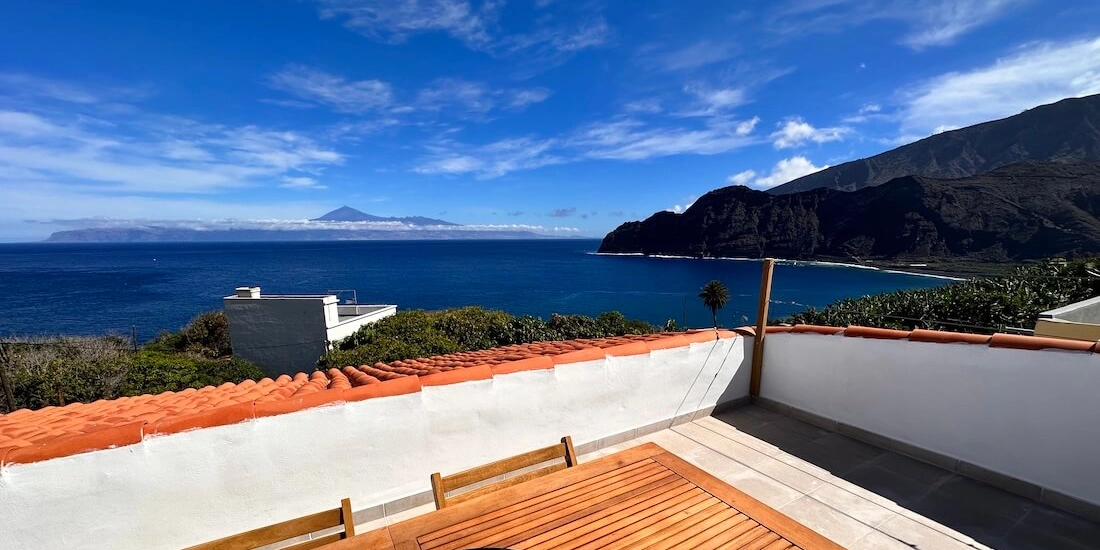
La Gomera is a true paradise for photographers. Numerous viewpoints (miradores) are spread across the island, offering spectacular views of deep ravines, rugged coastlines, and the vast blue of the Atlantic. On clear days, the view extends as far as the neighboring island of Tenerife with the majestic Teide – a motif that is especially popular with landscape photographers.
The most beautiful photo spots on La Gomera
Among the best-known and most worthwhile viewpoints are:
Mirador de Abrante
A spectacular glass walkway above the Valle de Agulo. Ideal for wide-angle shots and a strong sense of depth – particularly impressive in the morning with clear visibility.
Mirador de Cesar Manrique
Perfect for panoramic shots of the island’s typical ravine landscape. The combination of rocks, vegetation, and shifting clouds makes this spot especially varied.
Alto de Garajonay
The highest point on the island offers fantastic lighting conditions over the sea of clouds at sunrise – a highlight for nature and atmospheric photography.
Mirador del Palmarejo
Designed by the artist César Manrique, this viewpoint combines architecture and landscape. Ideal for harmonious compositions featuring terraced fields and valleys.
Coastal area near Valle Gran Rey
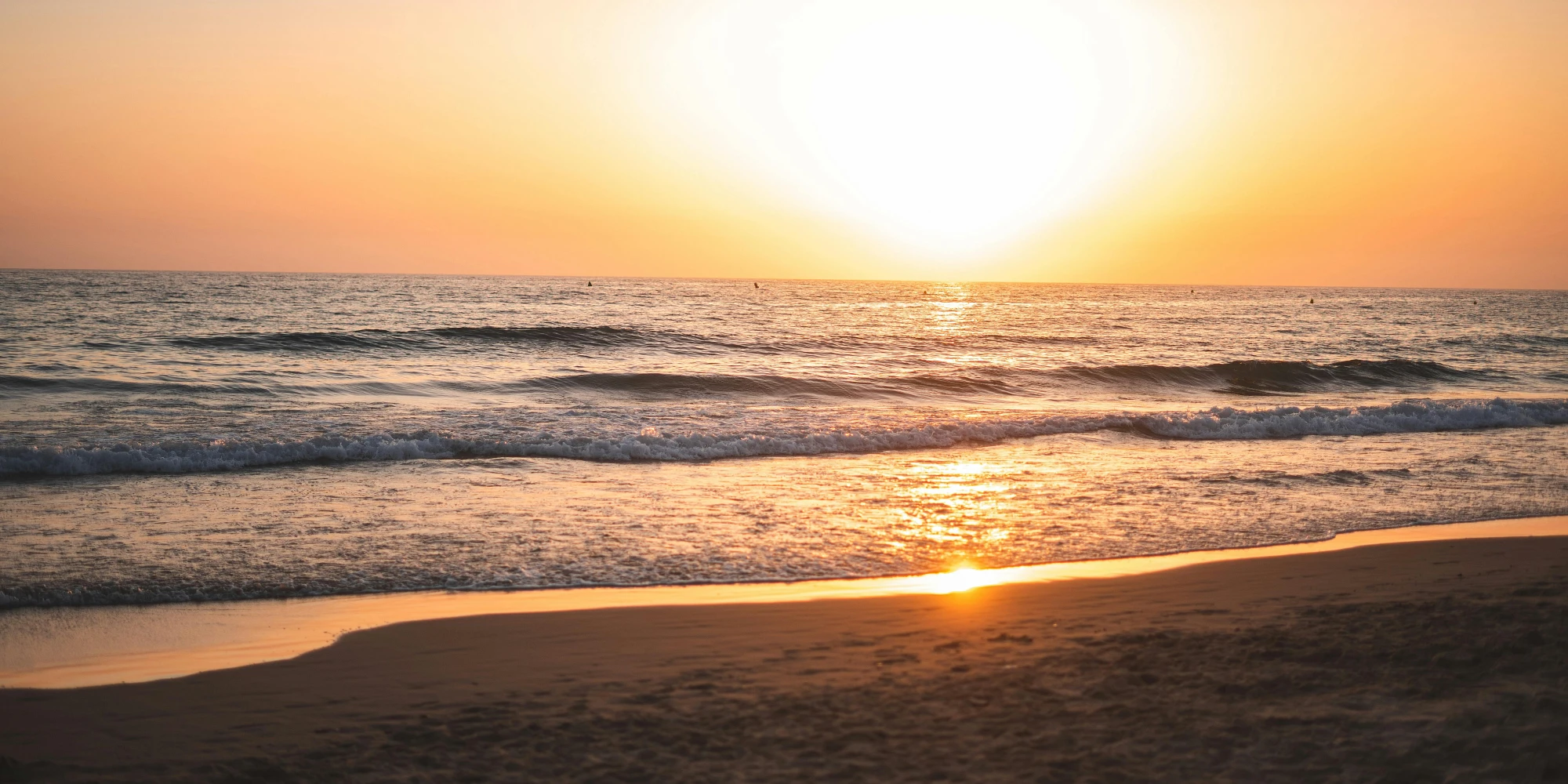
Especially at sunset, warm light moods, silhouettes, and long exposures with sea and rocks can be captured here.
Best times and tips for photographers
The best lighting conditions are in the early morning and during the evening hours. While sunrise is especially spectacular at higher elevations, the west coast and Valle Gran Rey offer perfect conditions for sunsets. Thanks to the ever-changing interplay of clouds, fog, and sunshine, La Gomera often produces dramatic and unique lighting moods – ideal for atmospheric shots.
Anyone who loves nature photography or simply enjoys capturing impressive landscapes will find almost unlimited opportunities on La Gomera. The combination of tranquility, vastness, and unspoiled nature makes the island a place where every camera is automatically filled with wonder.
9. Diverse beaches far away from the crowds
Although La Gomera is not a classic beach island with miles of sandy beaches, this is exactly what gives it its special charm. Instead of large hotel beaches, you will find small coves, black volcanic beaches, and natural coastal sections that blend harmoniously into the landscape. Many beaches are only sparsely visited and offer a soothing sense of peace – ideal for anyone seeking relaxation away from mass tourism.
Popular beaches on La Gomera
Among the best-known and most beautiful swimming spots on the island are:
Playa de la Calera (Valle Gran Rey)
One of the island’s most popular beaches, featuring fine dark sand, good infrastructure, and spectacular sunsets. Perfect for relaxed swimming and long beach days.
Playa del Inglés (Valle Gran Rey)
A natural stretch of beach with a wild charm. Particularly popular with independent travelers, those seeking tranquility, and sunset lovers.
Playa de Santiago
A small, well-maintained pebble and lava beach in a quiet coastal village. Ideal for a relaxing swim after a hike.
Playa de Alojera
Surrounded by palm trees and steep cliffs, this beach offers a particularly unspoiled atmosphere. A great place to enjoy nature and the sea all to yourself.
Charcos Naturales (natural seawater pools)
Along the coast, natural lava pools can be found again and again, offering a safe and unique bathing alternative when the sea is calm.
Tips for a relaxed beach visit
Swimming shoes are recommended, as many beaches consist of pebbles or lava rock.
Pay attention to currents and swell, as not every beach is suitable for carefree swimming.
It is particularly quiet early in the morning or during the week, when locals are at work and beaches are almost deserted.
Don’t forget sun protection – shaded areas are often limited on natural beaches.
La Gomera’s beaches are not classic postcard motifs, but places of tranquility, authenticity, and closeness to nature. Anyone who wants to experience the sea in its original form will quickly grow to love these quiet coastal spots.
10. Perfect for sustainable and mindful travel
La Gomera is ideally suited for a sustainable holiday. Short distances, local products, small accommodations, and a focus on nature experiences make the island especially attractive for environmentally conscious travelers.
Many visitors get around on foot or by bus, support local providers, and experience the island in a respectful way. Anyone who values gentle tourism will find La Gomera to be a true role model.
Flexible exploration of the island with a rental car
Anyone who wants to discover the diverse facets of La Gomera individually is well advised to rent a car. Due to the rugged landscape and many changes in elevation, a car offers maximum flexibility to comfortably reach remote coastal villages, secluded beaches, and spectacular viewpoints. Many of the most beautiful places are located off the main roads and are only accessible to a limited extent or with considerable time investment by public transport.
With a rental car, spontaneous stops can be made easily – for example at one of the many miradores overlooking deep ravines, for a short hike in the island’s interior, or for a coffee in a small village away from the tourist centers. A car is particularly worthwhile for trips to Garajonay National Park, to remote beaches such as Alojera, or along the winding coastal roads in the west of the island.
Although La Gomera has a well-organized bus network, timetables and transfer times significantly limit spontaneity. A rental car is therefore ideal especially for travelers who want to explore the island independently, efficiently, and away from the usual routes. Those who are willing to drive on the sometimes narrow and winding roads are rewarded with unique nature experiences and unforgettable views.
Rental car offers on La Gomera
Flight and travel options to La Gomera
Unlike larger islands such as Tenerife, La Gomera has deliberately remained quiet – and this is also reflected in its flight connections, which are limited but well organized.
The small La Gomera Airport (GMZ) is currently served exclusively from other Canary Islands. There are regular domestic connections, mainly from:
Tenerife North
Gran Canaria
There are no direct international flights to La Gomera. For most travelers, the journey therefore takes place via Tenerife. From Tenerife South or North Airport, you first travel to the port of Los Cristianos, from where ferries depart several times a day to San Sebastián de La Gomera. The crossing takes about 50 minutes and already offers a first impression of the island’s impressive scenery.
Alternatively, you can take a short domestic flight to La Gomera from Tenerife North or from Gran Canaria, which takes around 30 minutes from Tenerife and about 50 minutes from Gran Canaria and offers spectacular aerial views. Overall, getting there is a bit more involved than for other Canary Islands—whether by plane or in combination with a ferry - but this effort plays a key role in preserving La Gomera’s original character and low level of mass tourism.
Conclusion: La Gomera – small, unspoiled, and unforgettable
La Gomera is not an island for a quick package holiday. It is a destination for explorers, connoisseurs, and anyone who appreciates nature and tranquility. The combination of spectacular landscapes, authentic culture, a mild climate, and sustainable tourism makes it unique within the Canary Islands.
So if you are looking for a destination that slows you down, inspires you, and leaves a lasting, sustainable impression, you should definitely add La Gomera to your travel list. This island impressively proves that true beauty is often found in silence.
Our dedicated team offers you personal advice and tailor-made offers perfectly suited to your wishes. As we know the island extremely well and are in direct contact with the property owners, we can respond precisely to your ideas and advise you optimally. Contact us today and benefit from our expertise in selecting the best holiday homes and holiday apartments on La Gomera. We will make sure that your vacation becomes unforgettable!
Email:
Phone: +34 675 400 700